MECHANISING CASSAVA PRODUCTION FOR FOOD SECURITY AND INDUSTRIALISATION
Project Overview
Background & Rationale
Cassava (Cassava / Manihot esculenta) is one of Africa’s most important staple crops, feeding millions daily and offering immense potential for industrial uses such as food, starch, ethanol, flour, and bio-products. Yet, traditional cassava production in sub-Saharan Africa remains largely manual and labor-intensive, especially harvesting. This process is slow, physically demanding, prone to root damage, and unattractive to youth.
To unlock cassava’s full potential as a source of food security, industrial raw material, export commodity, and driver of agro-industrial transformation, there was a need for innovations that mechanise cassava cultivation and harvesting, reduce labor burden, increase efficiency, and make cassava production commercially viable at scale.
The Innovation: TEK Mechanical Cassava Harvester (TEK-MCH)
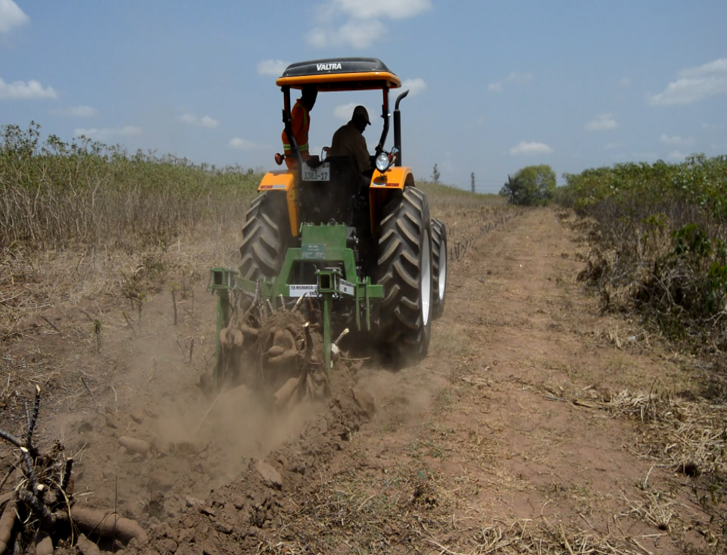
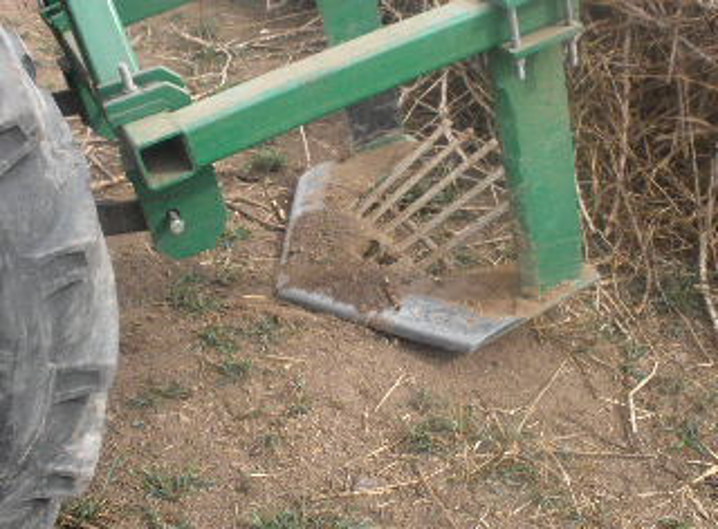
Under the project, Prof. Bobobee and his team developed the TEK Mechanical Cassava Harvester (TEK-MCH), a light, affordable mechanical harvester designed for tropical root and tuber crops, especially cassava, tailored for the realities of small and medium-scale farmers in Africa.
The TEK-MCH weighs about 300 kg and is one metre wide, making it compatible with medium tractors (about 60–75 hp) widely available to African farmers.
In operation, the harvester penetrates beneath the cassava root cluster to uproot plants at depths of about 25 cm or more. At tractor speed of 5 km/h, it can uproot roughly one plant per second, translating to a field capacity of about 1.9 to 2.5 hours per hectare.
The TEK-MCH not only uproots cassava roots but also leaves the field ploughed, preparing the land for the next cultivation season and saving additional time, fuel, and labor costs.
Its design and operation significantly reduce root damage, with a tuber damage rate of about 5–10% compared to manual harvesting.
This mechanised solution transforms cassava harvesting from a laborious, slow task into a rapid, efficient, and less physically taxing process, making cassava production more attractive, especially to younger farmers and agripreneurs.
Project Scope & Implementation
The TEK-MCH has been prototyped, field-tested, demonstrated, and deployed in Ghana and other African countries.
The project is complemented by efforts to develop post-harvest processing machines, such as motorised peelers, to support industrial cassava processing along the value chain and add value locally.
Demonstrations have been conducted for smallholder cassava farmers, processors, tractor operators, and students to create awareness and facilitate adoption of mechanised cassava production.
The harvester and related technologies contribute to increasing food production, reducing post-harvest losses, creating jobs, enticing youth into agriculture, promoting value-addition, and enabling industrial-scale cassava cultivation and processing.
Impact and Significance
By automating and simplifying harvesting, the TEK-MCH removes a major bottleneck and disincentive in cassava production, potentially attracting younger generations into farming.
Large-scale mechanised cassava production enabled by this innovation can support food security, meet rising food demands, and supply raw materials for industrial uses such as starch, ethanol, flour, and bio-products.
For Ghana and other African countries, adopting such technologies could transform cassava from a subsistence crop into a viable export and industrial commodity, creating new income streams, employment, agro-industry growth, and economic value addition.
The project demonstrates a model of research-to-impact: university-based innovation leading to practical, scalable solutions that address real national and regional challenges.
Vision: Towards a Sustainable, Industrial Cassava Economy
The ultimate aim of this project is to position cassava as a cornerstone of Africa’s agricultural-industrial transformation. By mechanising cultivation and harvesting, enabling value-addition via processing technologies, and promoting adoption across smallholders and commercial farmers, the project envisions:
A modern cassava-based agro-industry producing for domestic consumption, export, and industrial raw materials.
Creation of jobs across the value chain, especially for youth and graduates.
Enhanced food security, increased agricultural productivity, and reduction in post-harvest losses.
Technological empowerment through research, innovation, and local manufacturing.
Long-term socio-economic development, wealth creation, and sustainable utilisation of Africa’s cassava potential.
Call for Support & Collaboration
To fully realise the potential of mechanised cassava production and industrialisation across Africa, the project calls for:
Partnerships with government bodies, agricultural agencies, private investors, and industrial players to adopt and scale the TEK-MCH and associated cassava technologies.
Investment in local manufacturing to enable mass production of the harvester and spare parts, making the technology accessible and affordable for farmers.
Policy support creating favourable frameworks that prioritise cassava mechanisation, value-addition, and agro-industrial development, including support for research and innovation in universities and institutions.
Outreach and training programs to introduce the technologies to farmers, tractor operators, processors, youth, and stakeholders along the cassava value chain.
Conclusion
The “Mechanising Cassava Production for Food Security & Industrialisation” project embodies a visionary and pragmatic approach, combining academic research, engineering innovation, and practical agriculture to tackle longstanding bottlenecks in cassava production. By making cassava cultivation efficient, less laborious, and commercially viable at scale, the project helps unlock cassava’s enormous potential for food security, industrial processing, export, job creation, and economic growth for Ghana and the African continent.